


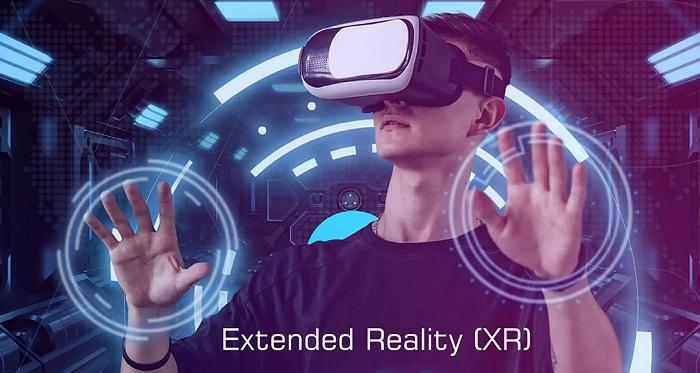
The global Extended Reality Market Size has grown into a significant multi-billion dollar industry and is projected to experience explosive growth, with some forecasts predicting it will become a trillion-dollar economy in the coming decade. This immense valuation reflects the widespread belief that XR represents the next major computing platform, destined to succeed the mobile phone. The market size is a composite measure of the global spending on all facets of the XR ecosystem, including hardware (headsets and glasses), software (platforms and development tools), content (games, applications, experiences), and related services. The sheer scale of the projected growth signifies that major technology companies and investors are making a massive, long-term bet on a future where our interactions with the digital world are no longer confined to flat screens but are seamlessly integrated into our physical environment.
Several powerful factors are responsible for driving the market size to these new heights. The primary driver is the massive investment from tech giants. Companies like Meta, Apple, Google, and Microsoft are pouring tens of billions of dollars into R&D, hardware manufacturing, and content development, single-handedly creating and scaling the market. Technological maturation is another key factor. Each new generation of hardware brings higher-resolution displays, more comfortable form factors, and more powerful processors, making the experience more compelling and accessible. The simultaneous growth of enabling technologies like 5G, which provides the high-speed, low-latency connectivity needed for mobile XR, and cloud computing (for rendering complex graphics remotely) is also a critical catalyst, creating the foundational infrastructure upon which the XR ecosystem can be built.
The economic impact of this rapidly expanding market size is profound and multifaceted. The industry is a powerful engine for job creation, fostering a new generation of 3D artists, game engine developers, user experience designers, and hardware engineers. It is also giving rise to entirely new business models and a vibrant "creator economy" within the metaverse, where individuals and small teams can create and monetize virtual goods, environments, and experiences. For existing industries, XR offers a powerful tool for increasing productivity. The use of XR for employee training, remote assistance, and design can lead to significant cost savings, reduced errors, and faster product development cycles, delivering a tangible return on investment that justifies the spending and further fuels the market's growth.
Looking ahead, the long-term trajectory of the Extended Reality market size is intrinsically linked to the realization of the "metaverse" concept. While currently a collection of disparate apps and experiences, the ultimate vision is a persistent, interconnected network of 3D virtual spaces. Achieving this will require unprecedented levels of interoperability, standardization, and further technological breakthroughs. As the hardware becomes as lightweight and socially acceptable as a normal pair of glasses, and as the "killer apps" for both consumer and enterprise emerge, the adoption of XR is expected to reach a critical tipping point. This will transition XR from a specialized device to an all-day, everyday computing platform, unlocking its full potential and driving the market size to its projected trillion-dollar future.
Explore More Like This in Our Regional Reports:

 Arabic
 French
 Spanish
 Portuguese
 Deutsch
 Turkish
 Dutch
Dutch
 Italiano
 Russian
 Romaian
 Portuguese (Brazil)
 Tiếng Việt